
The formats of the Imaginary Planets series allow you to choose how one of my photographic creations will be displayed in your home. Small and large prints, square or round formats, mounting and framing: here I present the possibilities within my body of work, to be confirmed for each piece.
The available sizes and finishes vary depending on the photograph. Please do take a look at the details page, then get in touch with me if you’d like to discuss the presentation in more detail. For guidance on how to display it, please see my guide to the dimensions of an art photograph according to the room.
The square: a format at the heart of Imaginary Planets
The square complements the circular composition of my images. It allows the forms to unfold without imposing a particular direction on the viewer’s gaze. The colours, textures and recomposed perspectives can then become the focal point of the encounter with the artwork.
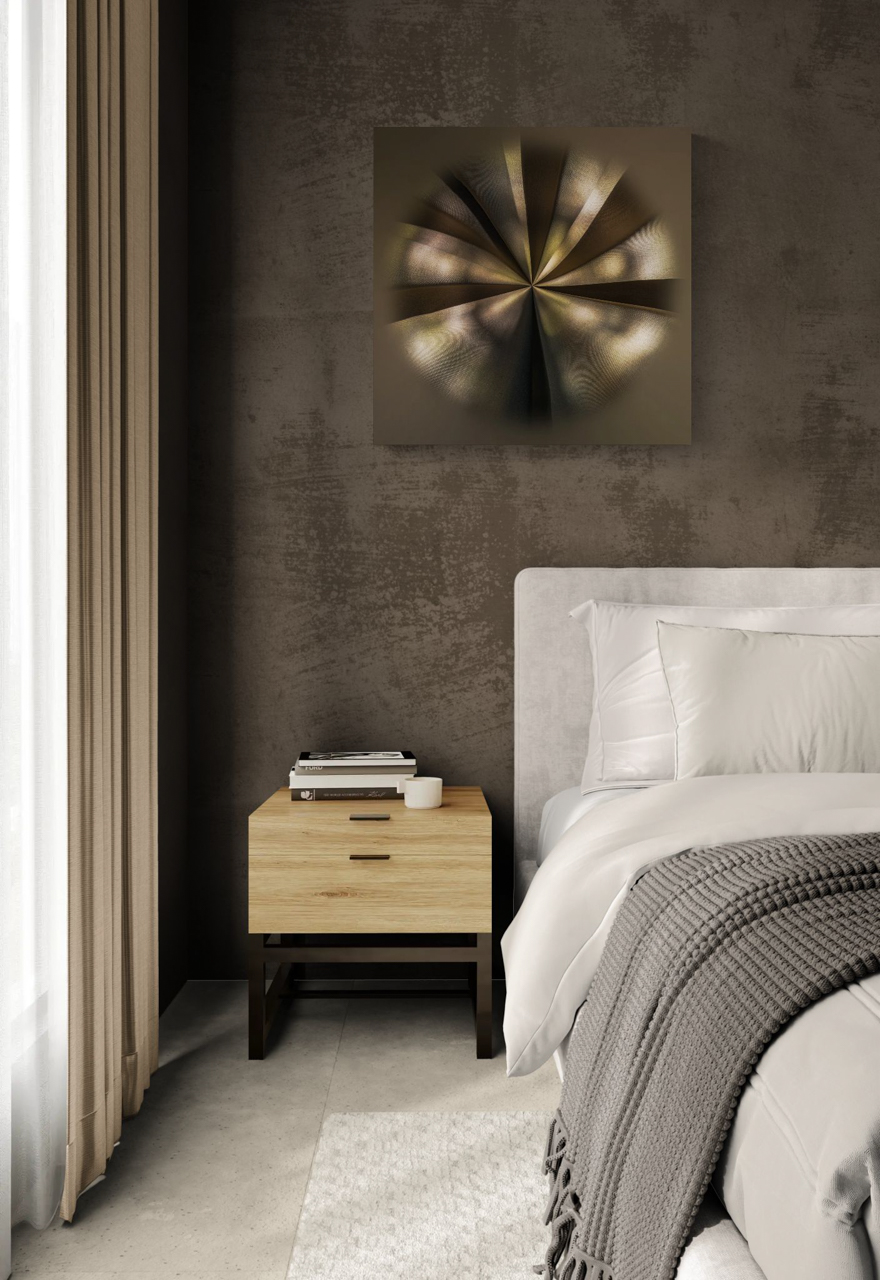
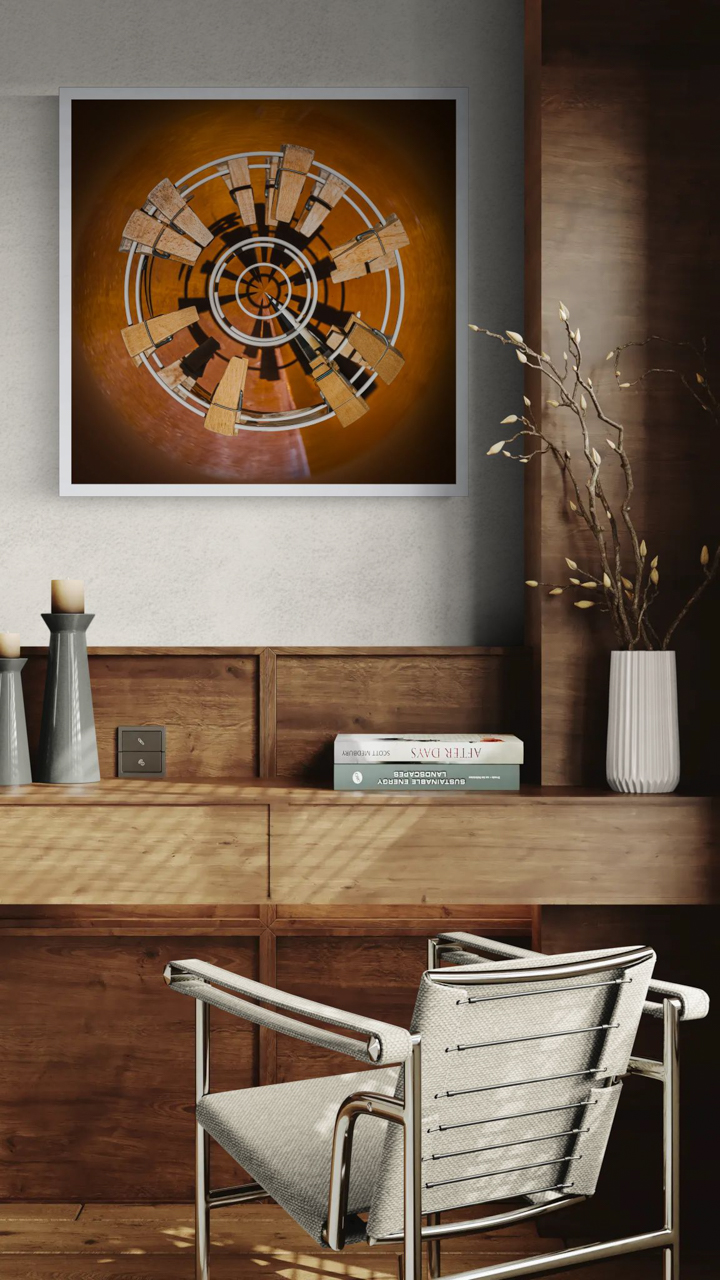
In a work such as The Lampshade or Choreography, this geometric frame interacts with the curves and movements within the image. The format is therefore not merely a measurement: it contributes to the interpretation of the photograph.


Small or large edition: two ways to encounter a work
Small-format works: a presence to be discovered up close
The smaller formats invite you to take a closer look. They find their place in a personal space; they can be given as gifts or gradually form part of a collection. A framed print measuring 20 × 20 cm is one of the options available within my body of work; please check availability for the selected piece.
Bringing several Imaginary Planets together also allows their colours or themes to interact. I can help you assemble a coherent selection, rather than simply grouping images based on resemblance alone.
Large-format works: a more comprehensive view
Enlarging an image allows more scope for textures and details. For my architectural or botanical compositions, it can significantly alter the way one engages with the image. The choice depends on the work itself, the specifications of the print and the technical possibilities for its production.

Presented in square or round formats, depending on the design.
Some of my Imaginary Planets are also available in a round format. The absence of corners reinforces the idea of a self-contained world and lends the composition a different presence. This option is not available for all works or for all finishes.
I can advise you on the options available for the photograph that interests you. The aim is to preserve its artistic balance and to select a presentation that will resonate in your home.
Match the sizes of the Imaginary Planets to their finishes
Fine Art paper, mounting on Dibond aluminium, ChromaLuxe or mounting under Plexiglas do not all offer the same relationship with light and material. Depending on the artwork and the available finish, we can consider a framed print or a presentation on a rigid backing.
Framing, a mat or a shadow box also affect the final dimensions. Before confirming a project, it is therefore important to distinguish between the dimensions of the image itself and those of the finished piece as it will appear on the wall.
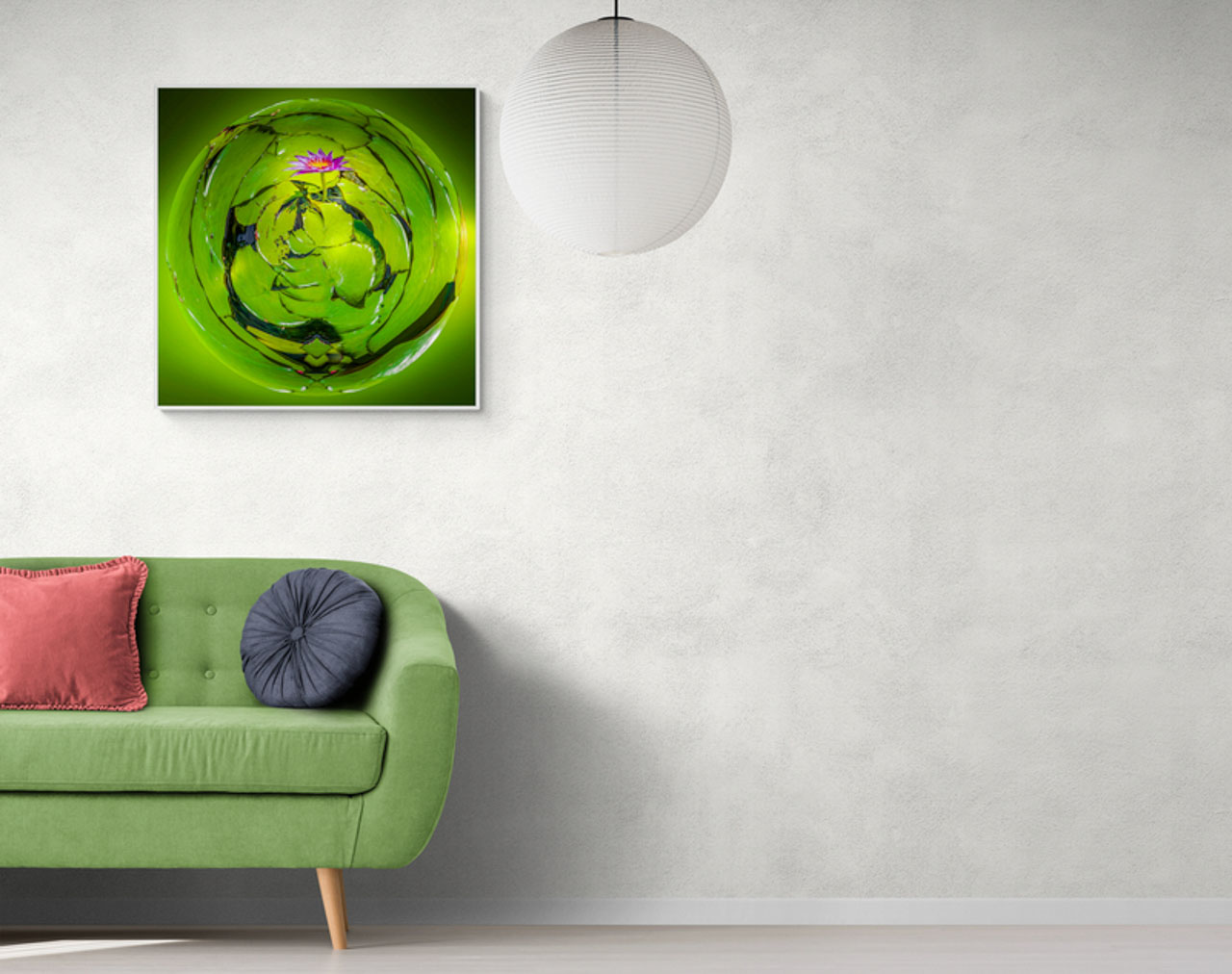
Some examples of how my works are displayed
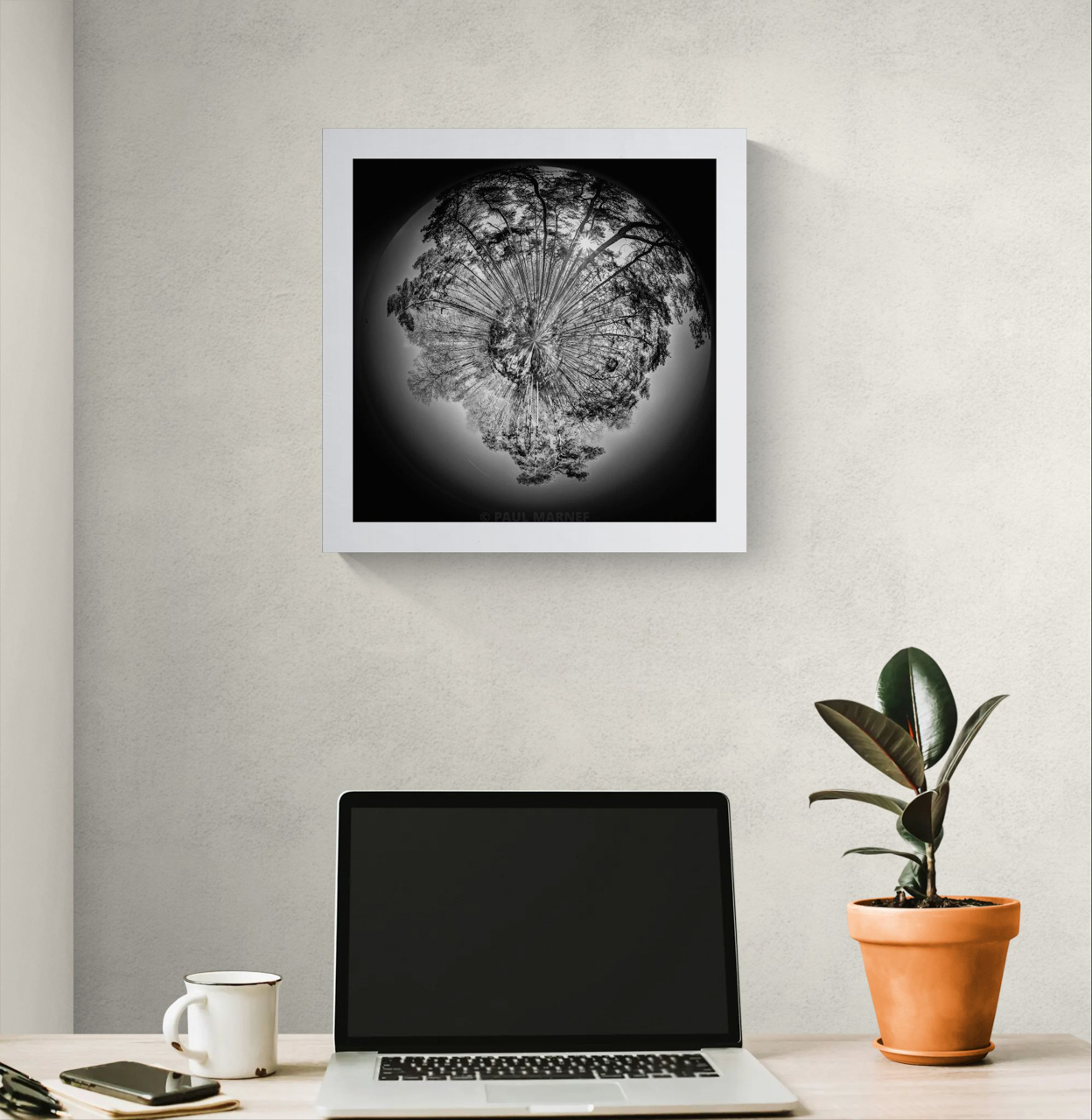
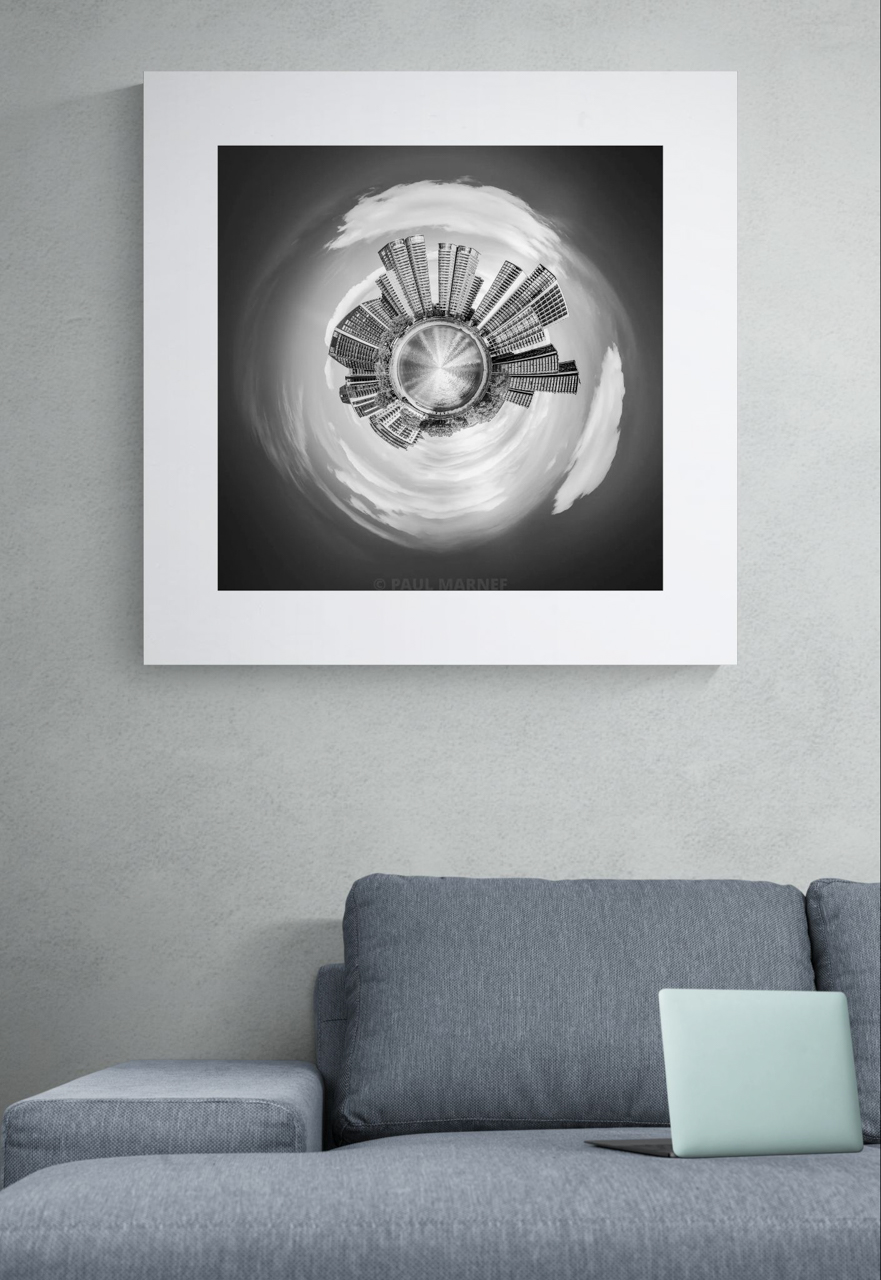
These display simulations allow you to visualise how an Imaginary Planet might look in an interior. They illustrate the relationship between the artwork, the furniture and the space; the scale and appearance may vary. The available dimensions are subject to confirmation for each creation.
Let’s prepare the presentation of your Imaginary Planet together
To discuss your project, please let me know the title of the work that appeals to you, the dimensions of the intended location and your preferred presentation style. If you already have a frame or wish to arrange several photographs together, this information will also help our discussion.
My works are available in limited editions, each signed and numbered and accompanied by a certificate of authenticity. The choice of format is integral to this approach and is determined by the specific production requirements of each photograph.
Ask me about the available formats for a work · Discover the Imaginary Planets
Are you unsure about the dimensions to choose for your wall? Take a look at my guide to choosing the size of an art photograph to suit your room: measurements, viewing distance and trying it out with a template.