
To hang a fine art photograph in your home, you need to give it a place where it remains legible, prominent and in dialogue with your space. As a fine art photographer, I offer guidance on choosing its location, observing colours, planning the lighting and taking care with the hanging, without reducing the image to a mere decorative accessory.
The interior scenes illustrating this article are simulated displays of my Imaginary Planets. To browse more displays and discover the works illustrated, please visit the Imaginary Planets in Interiors gallery. This gallery complements the advice given in this article.
Start with the artwork and your own perspective
Before seeking a colour to match your sofa, ask yourself what the photograph evokes for you. A place, a light, a texture or a composition can forge a personal connection that you will enjoy rediscovering every day.
In my work, I transform real subjects into circular, poetic worlds. A single image can be interpreted in different ways. Your choice may therefore be driven by emotion rather than by considerations of layout.
To explore this first step in greater depth, my guide to choosing a fine art photograph covers the artist’s vision, the print and authenticity.
Defining a space that allows the photograph to breathe
Look at the walls from the spots where you usually stand. A photograph can become the focal point of an entrance hall, complement a living room or provide a breath of fresh air in an office. It does not need to take up the whole wall to make its presence felt.
Identify any openings, furniture or elements that might disrupt the viewer’s experience. A margin around the frame and a position consistent with eye level help to give the image space.
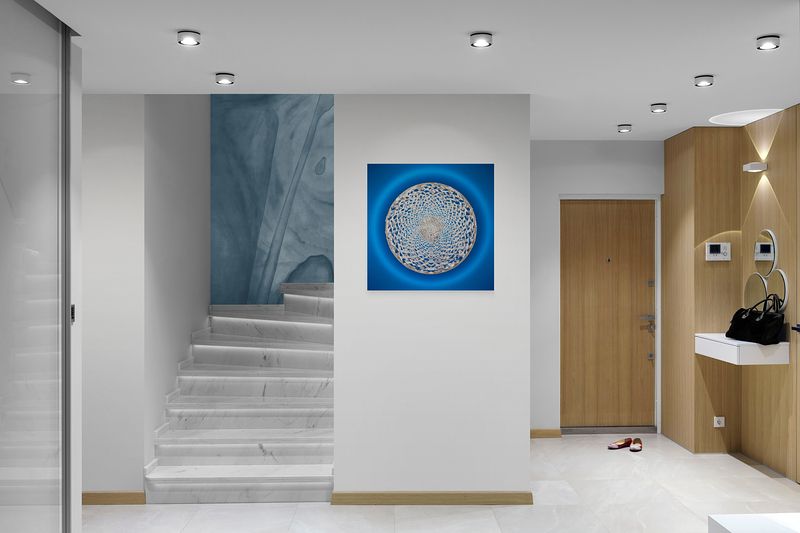
Hanging an art photograph: harmony or contrast with the décor?
A colour in the artwork may echo a textile, a material or a detail of the furnishings. This connection can create visual continuity without necessitating a fully co-ordinated interior.
In the presentation of *Proud!*, the green in the composition echoes the sofa. With *A Coral Dream*, the pink in the image interacts with the wall. These are two ways of imagining possible combinations; they do not dictate how these works should be exhibited.
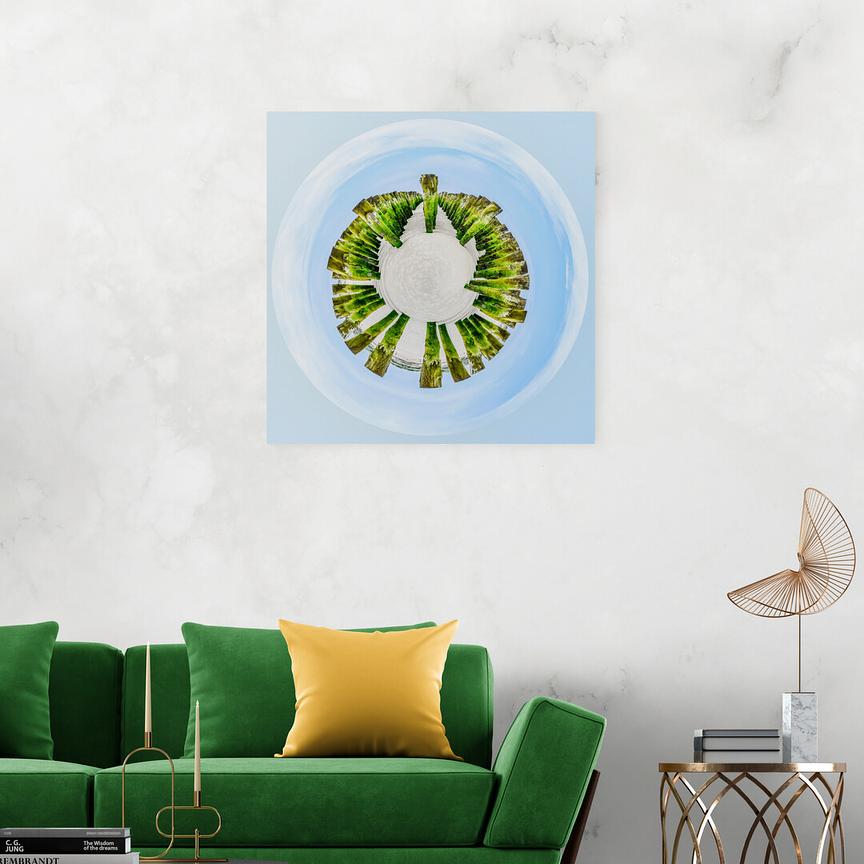
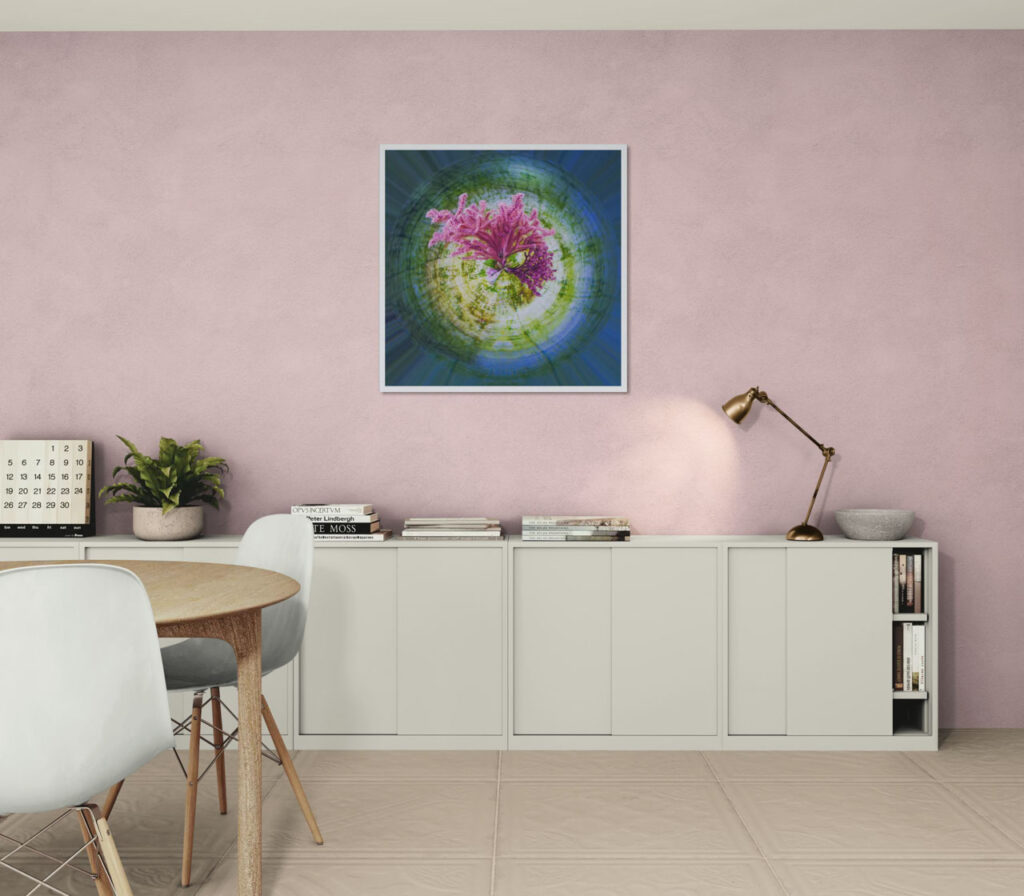
Contrast is equally possible: a colourful image against a plain wall, or a black-and-white photograph in an environment already rich in colour. Look at the whole scene, then return to the artwork: does it remain clear and prominent?
You can explore my works by colour: blue, pink, green or black. These themes make it easier to discover the works; they are no substitute for your own sensibility.
Combining materials without adding too many accessories
Wood, metal, textiles or plants can resonate with the textures of a photograph. Sometimes, a subtle connection is enough to link the artwork to the room.
Avoid placing too many objects around the frame if you wish to preserve the impact of the image. In a minimalist setting, a soft colour palette can be introduced with a sense of lightness; in a busier environment, a simple composition can provide a point of calm.
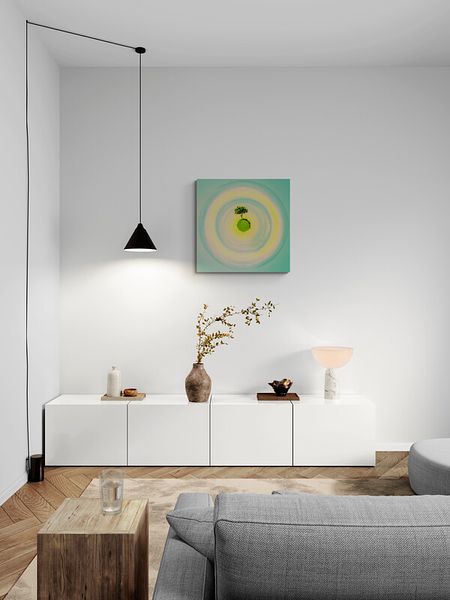
Determine the proportions and format
Measure the available space and view it from your usual vantage point. A paper template or masking tape suitable for the wall will allow you to test out different proportions, taking the frame into account.
For detailed guidance on displaying work at a trade fair, in a corridor or in an office, please consult my guide to art print sizes by room. For options specific to my creations, the Imaginary Planets formats page will help you prepare your project.
Consider the light before choosing the finish
A window, overhead lighting or a light fitting placed near the artwork can alter how it is perceived. Observe the reflections from the usual viewing positions, both during the day and in the evening.
A framed fine art print, a mount under Plexiglas or a ChromaLuxe finish do not react to light in the same way. The choice also depends on the look you prefer. I can advise you on the finishes available for the chosen artwork.
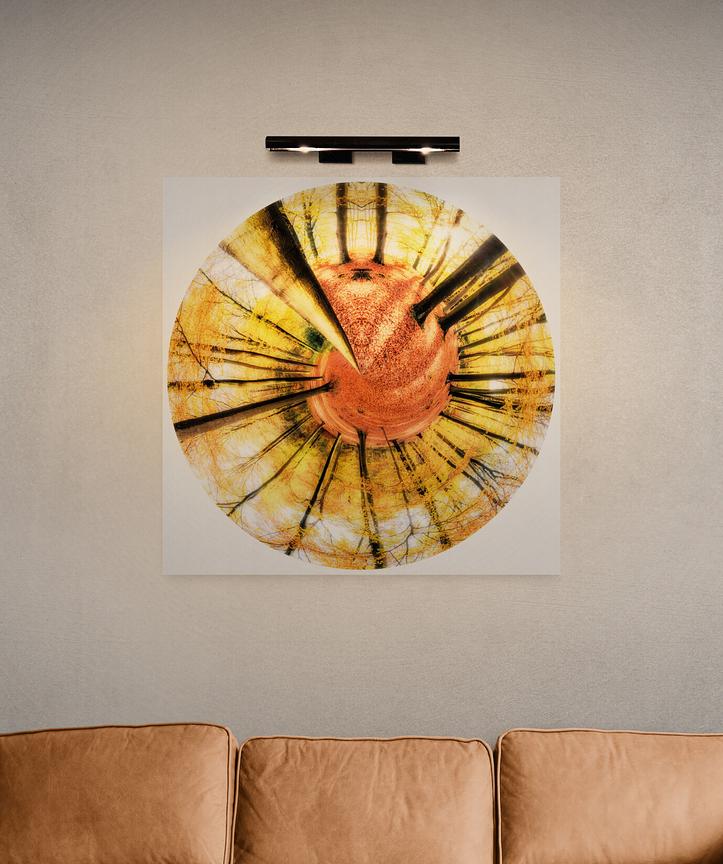
To preserve the print, avoid prolonged exposure to direct sunlight and locations subject to high humidity or heat. The choice of finish does not exempt the print from the need for suitable display conditions.
At what height should a photograph be displayed?
Assess the height from the usual viewing position. A piece of art placed above a piece of furniture should maintain a visual connection with it; in a hallway or passageway, it will mainly be viewed whilst standing. There is therefore no single height that is suitable for every situation.
Before drilling, mark the centre and edges of the frame with a template. View it from several angles and check the space above the furniture. For a series, select a common axis before hanging the first piece.
Preparing the display and visualising the overall effect
For a series, establish a guiding principle: a common thread, consistent spacing or a relationship between colours and subjects. Take into account the overall composition, not just the dimensions of each individual image.
Check the hanging system, the weight of the artwork and the condition of the wall. For heavy installations or where the wall is unsound, seek assistance from a qualified professional. A suitable mounting protects the artwork and allows you to view it with peace of mind.
A photograph of your space and a scale test can help you visualise the effect. A simulation is for illustrative purposes only: scale, screen colours, lighting and materials do not exactly replicate the appearance of a print.
Choosing an artistic presence for your everyday life
Finding the right balance between a photograph and an interior is not simply a matter of following a formula. It is shaped by your perspective, the characteristics of the room and the artwork itself. The aim is to give it a place where it can continue to move you.
Are you torn between several pieces? Please contact me to discuss your project. I’d be delighted to help you compare the options for format, finish and presentation.
To explore further, browse the Imaginary Planets in context or the gallery of works. My photographs are available as limited editions, signed and numbered, with a certificate of authenticity.