
Augmented reality in the service of contemporary fine art photography
Augmented reality allows me to extend some of my fine art photographs through an experience accessible via a mobile phone. The print remains the focal point; an animation offers a different interpretation of the image. I shall explain this convergence of photography, movement and the exhibition experience.
Indeed, augmented reality neither replaces fine art photography nor the original print. On the contrary, it serves to extend the viewer’s experience of a work of art that has already been printed, exhibited, framed and accepted as a photographic object. In other words, it adds a further layer of interpretation to contemporary photography, without erasing the physicality of the print.
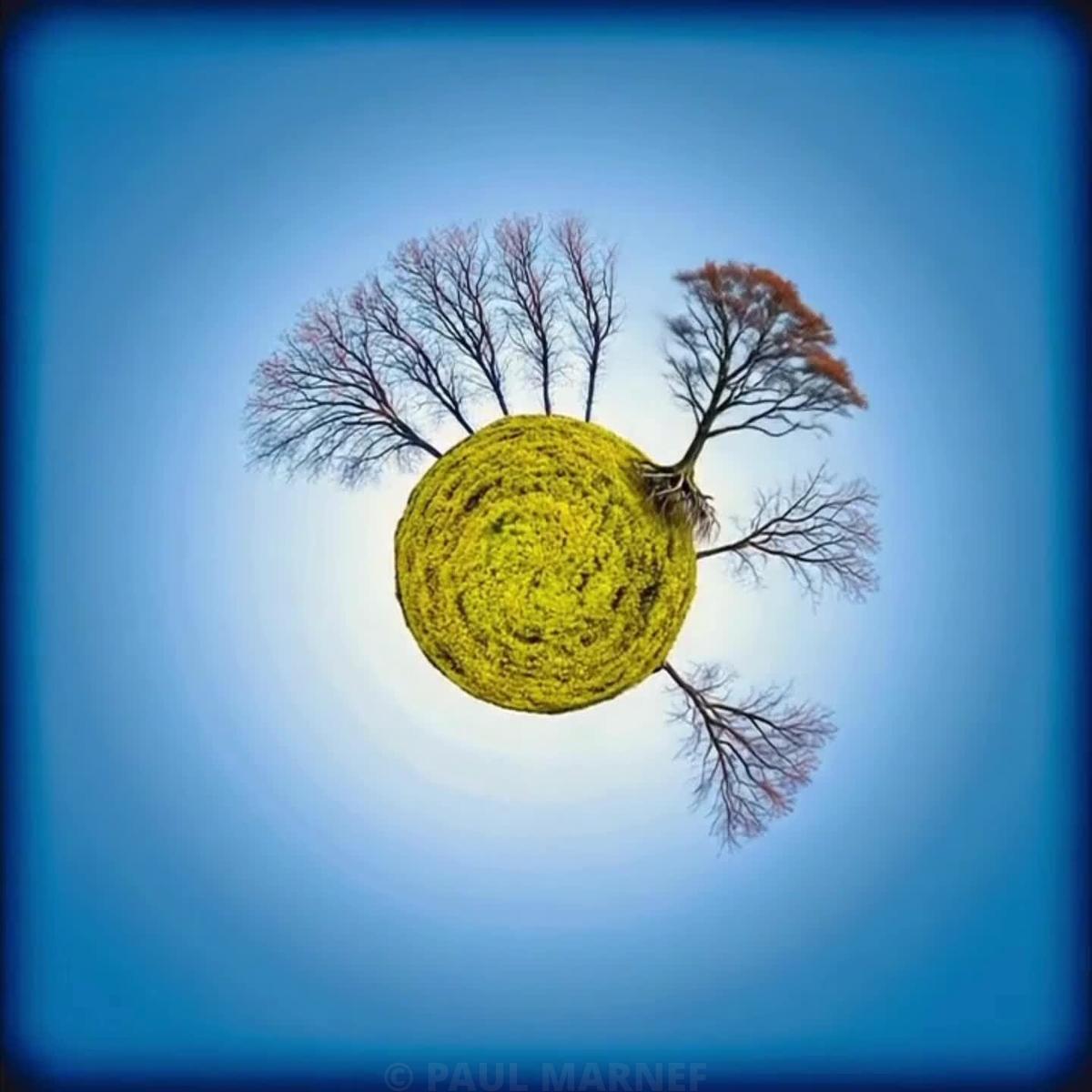
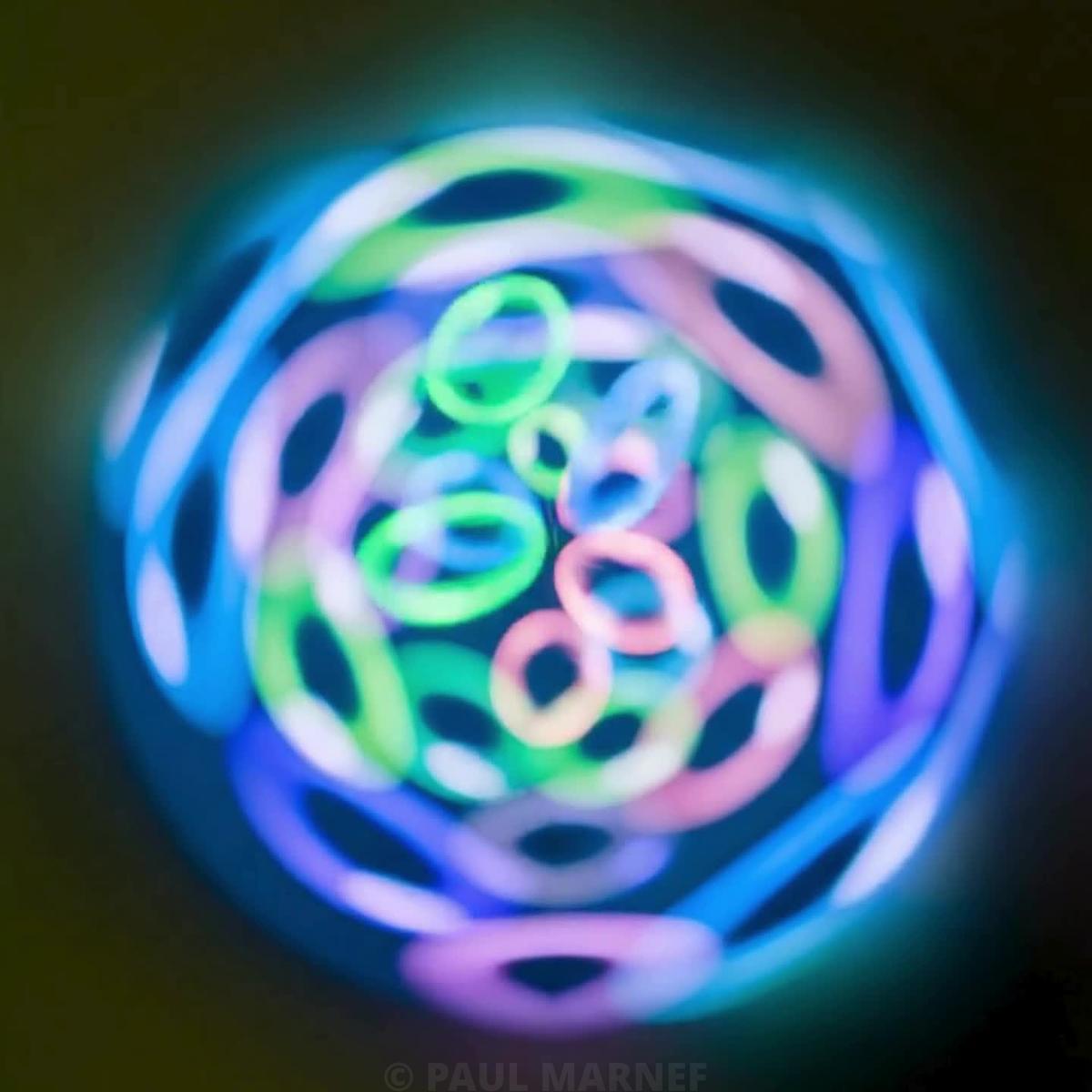
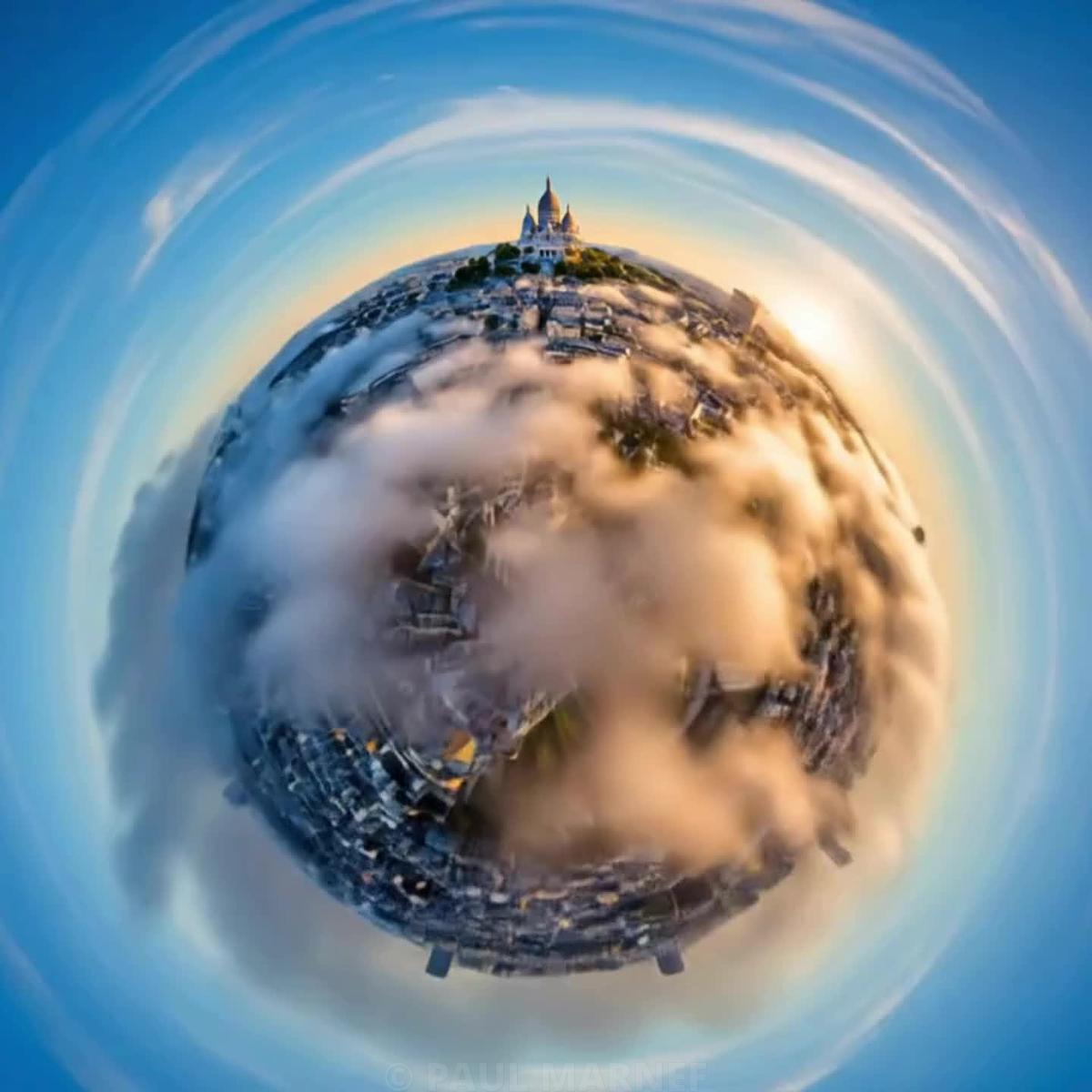
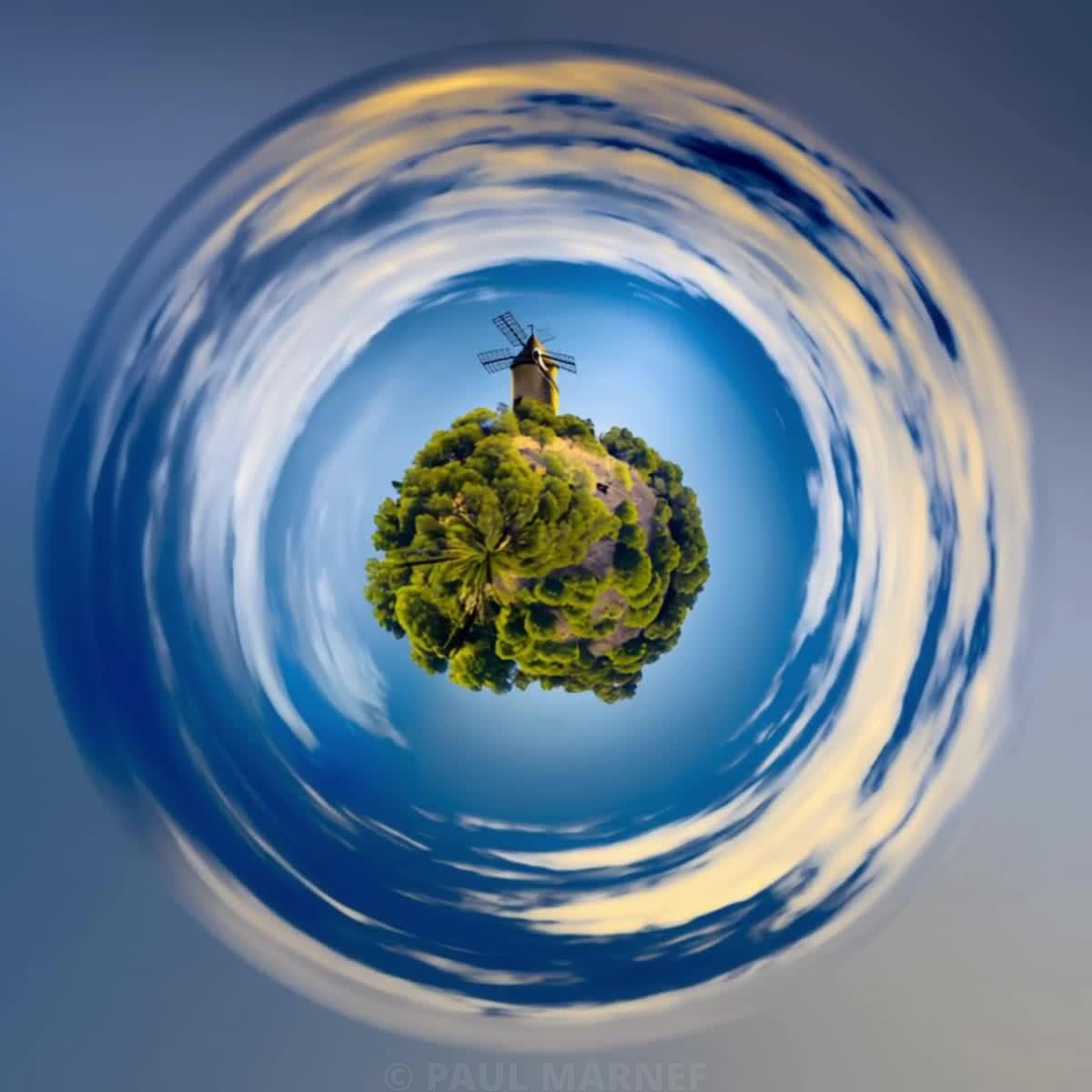
In my world of Imaginary Planets, this approach comes naturally. My artistic approach is based on fine art photographs that transform reality to create a poetic space. When I organise an exhibition or a photographic show, I generally offer augmented reality experiences for the photographs on display. In this way, the public first discovers the printed work and then, if they wish, can access additional content via their smartphone.
Consequently, the meeting of contemporary art and innovation feels coherent, meaningful and, above all, relevant to art lovers and collectors alike.
What is augmented reality in the world of art?
In the art context, augmented reality (AR) overlays digital elements—images, animations, sounds, text or 3D objects—onto a real artwork or space through a smartphone, tablet or smart glasses.
In practice, this allows, for example:
• to see a painting ‘come to life’ by filming it with an app,
• to display layers of information on a sculpture,
• to make a virtual artwork appear in a real location (gallery, street, museum, exhibition),
• to create an interactive experience where the viewer becomes a participant.
A simple distinction from virtual reality
• Augmented reality: one remains in the real world, enriched by digital technology.
• Virtual reality: one enters an entirely digital world.
In art, what purpose does augmented reality serve?
AR can be used to:
• enrich the aesthetic experience (movement, sound, storytelling),
• illustrate the artist’s creative process,
• contextualise a work (history, symbols, invisible details),
• exhibit in new ways, including without a fixed physical venue,
• attract a wider audience, particularly via social media and immersive exhibitions.
For my part, I see all of this, as well as the opportunity to offer the viewer an immersive extension of my creations.
Why augmented reality enriches a photographic work
A second reading for the viewer
First of all, augmented reality offers multiple levels of interpretation. A photographic image can already be visually striking thanks to its format, lighting or processing. However, some visitors like to go further: to understand the shot, to sense an intention, to discover a detail, or simply to feel the atmosphere.
Thanks to augmented reality, it is possible to add:
• a short text on the artistic approach,
• a note on the shot or the location photographed,
• a comment from the photographer,
• a subtle animation,
• or an ambient sound related to the scene.
Thus, photography remains at the centre, but is enriched by supplementary content. Furthermore, this approach works very well in a photography gallery or at an exhibition opening, as it stimulates curiosity without imposing an overly lengthy narrative.
A more immersive experience, without any gimmicky effects
Furthermore, augmented reality can heighten the emotional impact without turning the artwork into a technological demonstration. This is a key point for an audience of collectors, art lovers and visitors accustomed to art galleries.
For example, an artistic photograph of the sea or a landscape can already suggest a sense of space, silence or movement. Augmented reality can then enhance this sensation with a very subtle animation of the clouds, a play of light, or a subtle soundscape. The result is not a ‘special effect’, but an extension of perception.
Yet if the technology becomes too visible, attention is diverted from the artwork. That is why I favour a discreet approach that serves the art photographs and their presence.
In practical terms, how does augmented reality work?
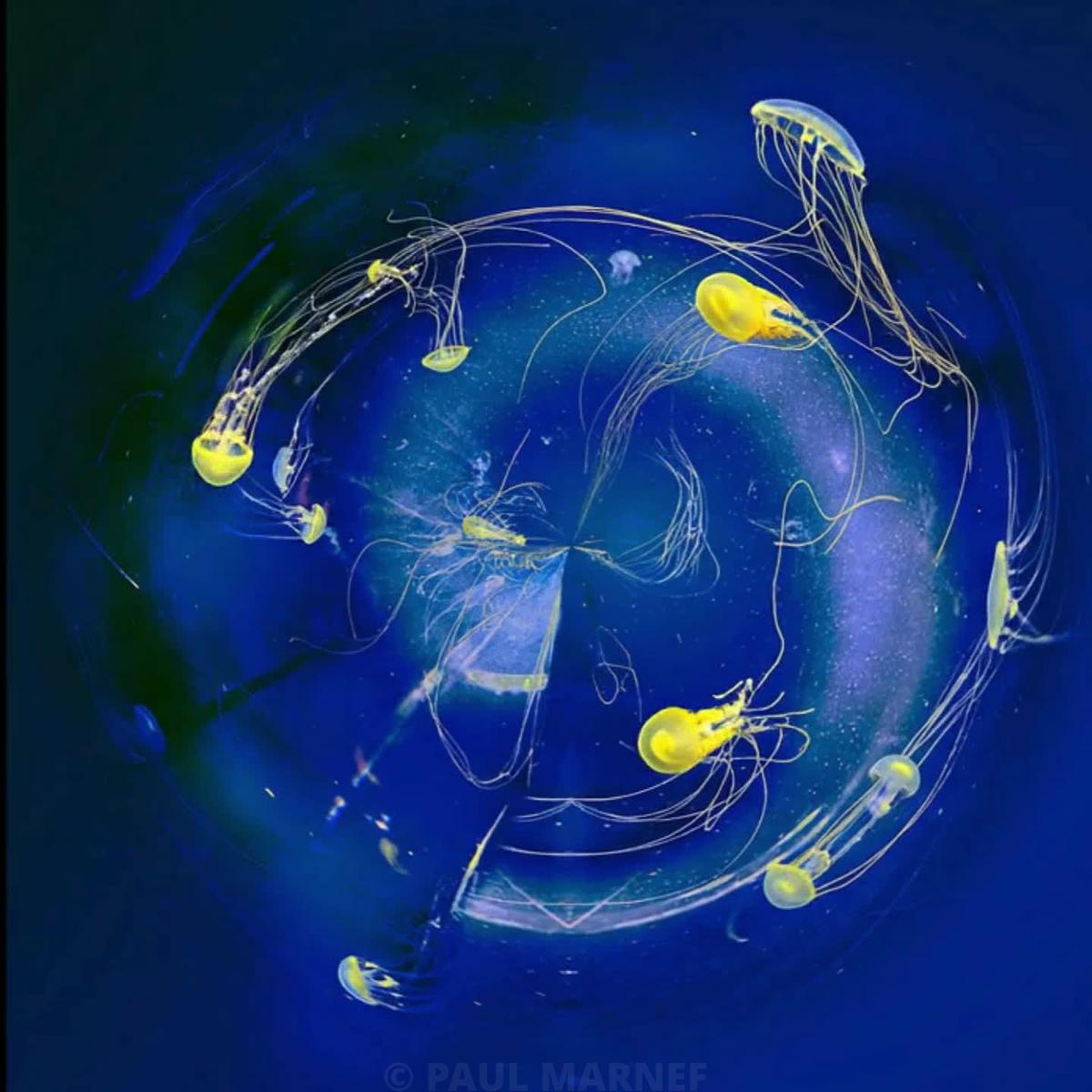
In practice, the principle is very simple: I use Artivive, an augmented reality app (free for the public to use) that recognises my works from their images. Visitors simply open the app on a phone or tablet and aim the camera at one of my photographs. As soon as the artwork is recognised, the app uses it as a visual anchor and superimposes digital content upon it.
In my case, this content is a short video that I produced separately. When the app recognises the artwork, it automatically plays this video, which appears directly over the image on the screen. The viewer therefore sees the actual artwork through their device, enhanced by an animated layer: this creates a more immersive experience, in which photography also becomes a narrative and living medium.
This approach allows the viewer to engage with the artwork for longer without replacing it. The exhibited image remains the focus, but it opens up to another dimension – movement, atmosphere or artistic intention – accessible simply via the Artivive app on a smartphone or tablet. Artivive is not, however, the only app capable of recognising an image and triggering videos from it.
On display: real added value for a photography gallery
Creating a memorable moment at an exhibition opening
At a private viewing or a photography exhibition, visitors encounter a great many images in a short space of time. Yet certain works linger more firmly in the memory. Why is that? Because they create an interaction, a surprise, a moment of pause.
The augmented realities I create allow me to initiate or continue a dialogue, to complement the narrative, but also to stimulate the imagination of visitors, collectors and lovers of photographic art.
This is precisely what augmented reality brings to a photography gallery or an art centre. In my exhibitions, visitors can view the prints and then activate the augmented experience on certain works. From that moment on, their attention is sustained: they are no longer merely looking at a photograph, but entering a more complete photographic universe.
Furthermore, this approach also facilitates discussions during the exhibition. It enables conversation about:
• the photographic process,
• framing choices,
• the transition from reality to the artistic image,
• the finishing touches and the printing medium,
• and, more broadly, the role of technology in the art of photography.
An elegant interpretation for art lovers
Furthermore, augmented reality plays a very useful mediating role. In an art gallery, it is not always possible to display long texts alongside the artworks. Augmented reality therefore allows information to be added without cluttering the display.
Example 1: describing the creation of an artistic
photograph A work from the ‘Imaginary Planets’ series may be inspired by a beach, a landscape, a detail of vegetation or an urban scene. Thanks to augmented reality, I can explain the shot, the location or the original intention. The viewer gains a better understanding of the transformation that has taken place, whilst retaining their freedom of interpretation.
Example 2: revealing a compositional
detail Some photographic works are best appreciated in large format, but also in their finer details. Augmented reality can guide the viewer’s gaze towards a specific area: a texture, a contrast, a line, or an almost abstract element. The viewer then returns to the print with a fresh perspective.
Example 3: giving the fine art photographer
a voice A short audio message adds a human touch. For a collector, hearing the fine art photographer speak about their fine art photographs strengthens the connection with the work. It adds depth to the relationship between the photographic creation and the acquisition.
Prints, finishes and augmented reality: a coherent whole
The fine art print remains central
It is important to bear in mind that augmented reality only makes sense if the photographic print is already of high quality. Print quality, materials, finish, format and framing remain essential. A professionally printed photograph has a presence that a screen cannot replicate.
In my practice, prints and original prints are conceived as art objects. Depending on the work and project, finishes may include:
• aluminium Dibond (or Dibond),
• aluminium mounting,
• acrylic glass / plexiglass,
• shadow box,
• photographic paper,
• fine art paper,
• custom frames or mounts.
Consequently, augmented reality complements an already accomplished work. It does not replace the print, the medium or the quality of the prints. It simply enhances the experience surrounding the photographic work.
Limited editions and certificate of authenticity
Augmented content accompanies certain works; it does not certify their provenance or their numbering. The certificate and print documentation retain their specific roles. Please enquire which works actually feature an interactive experience.
Thus, the technological aspect enhances the perceived value of the limited edition, whilst remaining at the service of the relationship between the artwork and its owner.
A contemporary approach, yet faithful to the art of photography
Between photographic tradition and innovation
The history of photography shows us that this medium has always evolved: from analogue to digital, from the darkroom to pigment prints, from small formats to large formats. Today, augmented reality forms part of this continuum. It does not erase tradition; it offers an extension of it.
Moreover, enthusiasts of black-and-white photography, contemporary photography, original photographs or photographic series may also find this of interest. Augmented reality is not dependent on visual style. It can accompany a highly poetic work, a contemporary photograph, a more conceptual image, or even a more documentary approach.
In other words, it does not define the work. It accompanies it.
An experience tailored to art lovers aged 35 and over
The experience must remain simple and optional. Each visitor can view the print without a mobile phone, then choose to explore the animated content. I am keen to ensure that both ways of viewing remain possible.
That is why, in my exhibitions, I present it as an invitation. Visitors can look at the prints, appreciate the finishes, observe the details, and then choose whether or not to activate the augmented experience. This freedom is important. It caters to every kind of visitor: the contemplative, the collector, the technology enthusiast or the simply curious.
Extending the emotion of the work, without ever betraying it
Ultimately, augmented reality can add a great deal to a fine art photograph: more context, greater immersion, more dialogue, and sometimes a prolonged emotional response. However, its true strength lies in its discretion. It must remain an extension of the artwork, not a demonstration.
For my fine art photographs of the Imaginary Planets, this approach really comes into its own. It allows me to offer a richer experience for the viewer, whether at an exhibition or in a gallery, whilst preserving what matters most: the presence of the print, the quality of the image, and the poetry of the work.
In short, augmented reality does not replace photographic art. When well-conceived, it can reveal a new depth to it.
Discover the works available in fine art finishes
The Imaginary Planets are available in several professional finishes: Fine Art prints, ChromaLuxe, Diachrome or other media depending on the artwork. Each print is produced as a limited edition, signed, numbered and accompanied by a certificate of authenticity.
To continue your exploration
Would you like to find out more about a work or how it is presented? Please write to me to discuss it. You can also explore other topics on the fine art photography blog.
See also: The Creation of the Imaginary Planets: from the real landscape to the photographic work; Contemporary fine art photography: transforming reality to broaden our perspective.