Online sales of fine art photographs, original artworks, and limited-edition art prints.
Paul Marnef, a contemporary art photographer, is the creator of Imaginary Planets, a series of original photographs offered in a fine art finish.

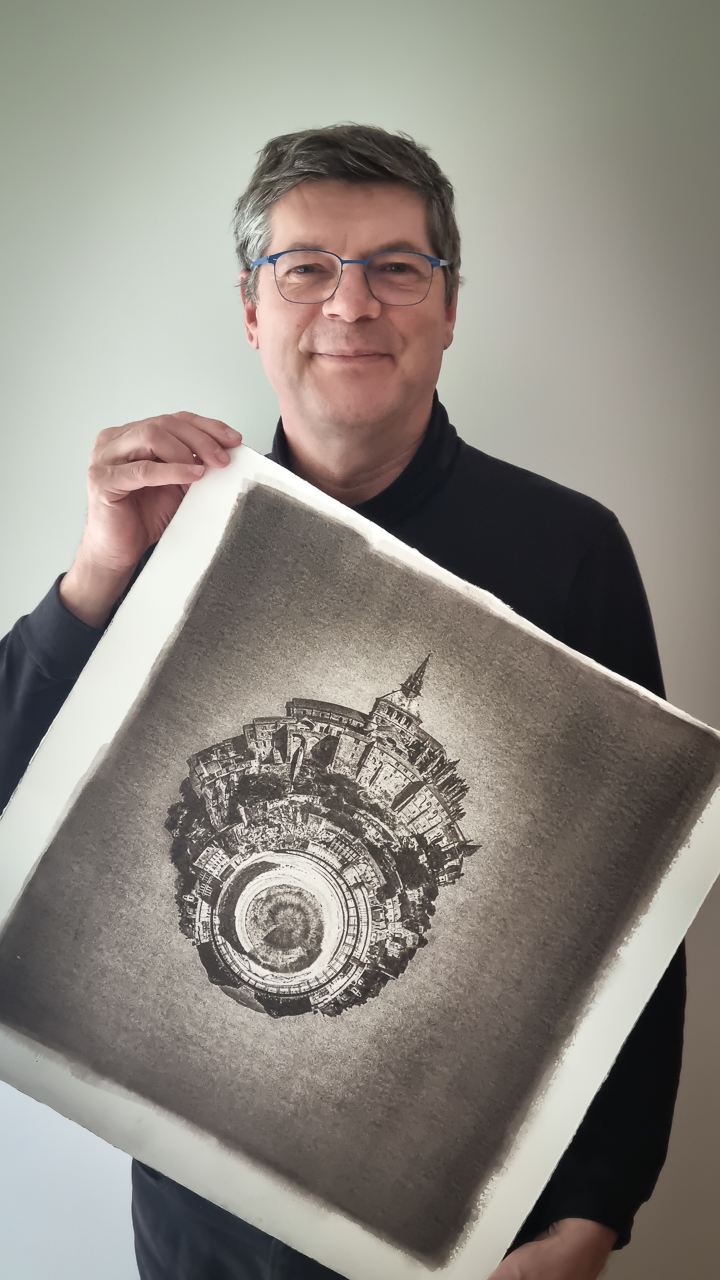
My first ZeroChrome-SbQ print: an encounter between photography, pigment, and light

There are moments when an image transcends the realm of the file, the screen, or traditional printing to become something else entirely: a material, a surface, a presence. This is precisely what I felt upon discovering my first print made using the ZeroChrome-SbQ process.

For several years, my artistic work has revolved around Imaginary Planets, a series of photographs transformed into circular worlds, recomposed landscapes, and suspended universes. These creations arise from a relationship between the act of shooting, digital transformation, composition, and poetic intuition. But a photographic work is not limited to its image. It also exists through its support, its finish, its format, its texture, and its way of capturing light.

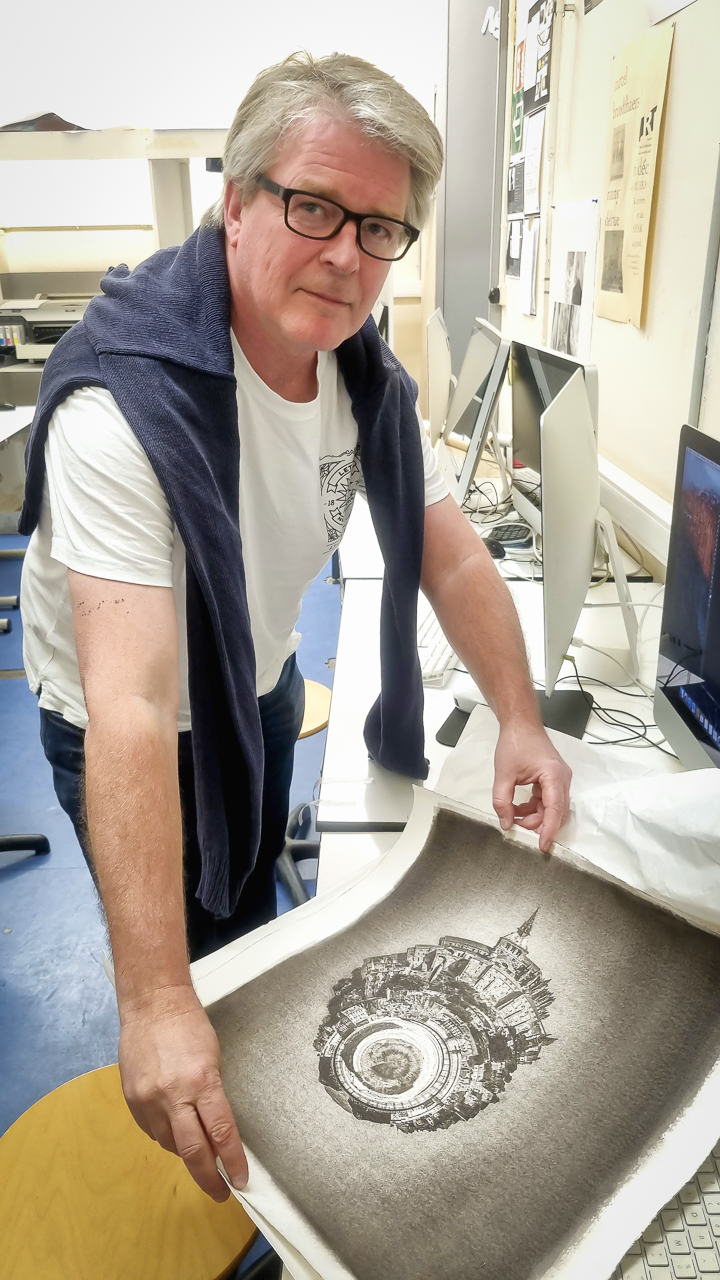
It was in this exploration of the photographic object that I wanted to delve into ZeroChrome-SbQ, an alternative photographic process related to pigment prints. For this first experiment, I entrusted the printing to Frédéric Materne, a photographer specializing in gum bichromate printing and a professor at the Royal Academy of Fine Arts in Liège. His expertise allowed me to confront my visual world with a demanding technique, where pigment, light, paper, and the manual gesture play an essential role.

This first print will be presented in an exhibition in Brussels this autumn. It marks an important step for me: a dialogue between contemporary photography, revisited historical processes, and the materiality of the fine art print.

What is the Zerochrome-SbQ process?
ZeroChrome-SbQ is a pigment printing process that belongs to the broader category of alternative photographic processes. In its essence, it can be compared to techniques such as gum bichromate, casein, or certain direct carbon processes. In all these cases, the image does not appear through conventional inkjet printing, but rather through the action of light on a light-sensitive layer composed of a binder and pigments.

The general principle is fascinating. A light-sensitive pigment layer is prepared and applied to a substrate, often a suitable paper. This layer is then exposed through a negative or contact plate. The areas exposed to light react differently from those that remain protected. During development, usually with water, the image gradually reveals itself.

ZeroChrome-SbQ stands out for its aim to offer an alternative to the chromium salts historically used in certain pigment processes, notably gum bichromate. The very name of the process indicates this: “Zerochrome” refers to the idea of ​​a chromium-free process. SbQ, on the other hand, is associated with a photosensitive chemistry that makes the binder reactive to light.

Simply put, Zerochrome-SbQ allows you to create a photographic image from pigments without using the chromium salts that have long been associated with certain historical processes. This doesn't mean that this type of technique can be practiced without knowledge or precautions, but it opens up a very interesting avenue for artists and printers who wish to explore more contemporary pigment processes.
Paul Marnef Tirage Photo Zerochrome Sbq

My first Zerochrome-SbQ fine art photo print

A Connection to Gum Bichromate

To understand the appeal of ZeroChrome-SbQ, one must return to gum bichromate. This historical process, which emerged in the 19th century, relies on a mixture of gum arabic, pigment, and chromium salts. When exposed to light, this mixture hardens to varying degrees depending on the area, allowing an image to appear during development.

Gum bichromate holds a special place in the history of photography. It has often been appreciated by pictorialist photographers, but also by artists drawn to a more manual, more interpretive, less strictly mechanical approach to photography. Each print can be unique. The choice of pigment, the density of the layers, the paper, the exposure time, the development process, and the printer's hand all influence the final image.

Zerochrome-SbQ shares this same sensibility: that of a photography that embraces slowness, nuance, human intervention, and the unexpected. But it offers a contemporary approach, replacing chromium salts with a different photosensitive chemistry.

It is precisely this link between tradition and innovation that interested me. Zerochrome-SbQ doesn't simply seek to imitate an old process. Rather, it allows us to extend a history: that of images made of light, pigment, and patience.

Why this process interests me as a photographic artist

My work with Imaginary Planets is based on a transformation of reality. I start with a photograph, often taken in a landscape, an urban setting, a natural or architectural space. Then, the image is recomposed, curved, flipped, and worked on until it becomes a planet, an autonomous world, a poetic form.

This process may seem very contemporary, almost digital in nature. Yet, at its core, it connects to a much older question: how does an image become a work of art? Is it through the gaze? Through composition? Through the subject? Through the print? Through the material?

In my artistic approach, I also want to explore other avenues, other media, to present my creations.

With ZeroChrome-SbQ, this question takes on a very concrete form. The image is no longer simply given by the final file. It is embodied in a pigmentary material. It is built up layer by layer, through exposure, through reaction to light. It becomes a photographic object in the truest sense of the word.

What moves me about this approach is the return to a kind of slowness. In a world saturated with fast-paced images, shared, seen, and then forgotten, pigment printing imposes a different rhythm. It compels us to look differently. It invites us to consider the image as a physical presence, almost fragile, but also profoundly enduring.r des Planètes Imaginaires repose sur une transformation du réel. Je pars d’une photographie, souvent prise dans un paysage, un lieu urbain, un espace naturel ou architectural. Ensuite, l’image est recomposée, courbée, retournée, travaillée jusqu’à devenir une planète, un monde autonome, une forme poétique.

Ce processus peut sembler très contemporain, presque numérique par nature. Pourtant, au fond, il rejoint une question beaucoup plus ancienne : comment une image devient-elle une œuvre ? Est-ce par le regard ? Par la composition ? Par le sujet ? Par le tirage ? Par la matière ?

Je veux également, dans ma démarche artistique, explorer d'autres voies, d'autres médias pour restituer mes créations.

Avec le ZeroChrome-SbQ, cette question prend une forme très concrète. L’image n’est plus seulement donnée par le fichier final. Elle est incarnée dans une matière pigmentaire. Elle se construit par couches, par exposition, par réaction à la lumière. Elle devient un objet photographique au sens fort du terme.

Ce qui me touche dans cette démarche, c’est le retour à une forme de lenteur. Dans un monde saturé d’images rapides, partagées, vues puis oubliées, le tirage pigmentaire impose un autre rythme. Il oblige à regarder autrement. Il invite à considérer l’image comme une présence physique, presque fragile, mais aussi profondément durable.

A Collaboration with Frédéric Materne

For this first experience, I chose to work with Frédéric Materne, whose expertise in historical processes, particularly gum bichromate, was essential. ZeroChrome-SbQ requires a nuanced understanding of the relationship between pigment, binder, light, support, and development. It's not simply about "producing" an image, but about guiding its emergence.

This collaboration is important to me. In the field of fine art printing, the role of the specialized printer can be crucial. The artist brings an image, an intention, a world. The printer brings technical mastery, knowledge of the process, and the ability to translate this intention into a tangible material.

The print then becomes the result of a dialogue. It doesn't betray the original image; it interprets it. It gives it a different density, a different vibration, a different way of existing.

In my case, this encounter with ZeroChrome-SbQ allowed me to see my work in a new light. An Imaginary Planet, printed using this process, does not produce the same sensation as a classic Fine Art print or a contemporary finish like Chromaluxe. It seems to belong to another time. It retains the contemporary aspect of the image, but it inscribes it in a slower, quieter, more artisanal material.
Frederic Materne Tirage Zerochrome Sbq

Frédéric Materne with my first Zerochrome-SbQ print

Photography, Pigment, and Light

What fascinates me about this first print is the way it brings together three fundamental elements: photography, pigment, and light.

Photography, first of all, because everything begins with an image. Even transformed, even recomposed, even transformed into a planet, the work retains a connection to reality. It comes from a place, a moment, a gaze.

Pigment, secondly, because color is no longer simply digital data or mechanically applied ink. It becomes matter. It has thickness, a presence, a direct relationship with the paper. The pigment gives the print an almost pictorial quality, without taking it outside the realm of photography.

Light, finally, because it intervenes at several points. It is present during the shooting. It is present in the transformation of the image. Above all, it is present in the process itself, since it is light that acts on the light-sensitive layer and contributes to the development of the print.

It is this loop that interests me: light captures the world, then light reveals the image again on the paper. Between the two, there is the artist's vision, the printer's expertise, and the memory of the pigment.

A New Stage in My Artistic Work

This first ZeroChrome-SbQ print does not replace the other finishes I usually offer for my fine art photographs. My works continue to exist as Fine Art prints, in contemporary finishes, in limited editions, and in various formats. But this experience opens up another avenue.

It allows me to explore photography as a material, as a trace, as a unique or nearly unique object. It leads me to reflect on how the same image can change its nature depending on the process used. A work is not only its subject or its composition. It is also the way it is produced, printed, developed, and presented.

ZeroChrome-SbQ interests me because it creates a bridge between several dimensions of my work: digital transformation, fine art photography, the history of processes, the slowness of printing, and the physical presence of the work.

It is a path I wish to continue exploring.

A print to be presented in Brussels this fall

This first ZeroChrome-SbQ print will be presented this fall in an exhibition at the Louise Linthout Gallery in Brussels. I will then have the opportunity to show it to the public, not only as an image from my Imaginary Planets universe, but also as a photographic work produced using a rare and demanding process.

I like the idea that this creation can be viewed on several levels. One can see it as an Imaginary Planet, a poetic image, a circular world. One can also see it as a pigment print, a worked surface, an encounter between a contemporary image and an alternative photographic process.

This exhibition will therefore be an opportunity for me to share a new stage in my artistic research. It will reveal something about my relationship to photography: a photography that is not limited to the captured moment, but that continues to live in the choice of medium, in the materiality of the print, and in the way the work encounters the viewer's gaze.

Conclusion: From Image to Photographic Object

With this first ZeroChrome-SbQ print, I feel I have reached a new stage. Not a break, but a deepening.

From the beginning, my Imaginary Planets series has sought to transform reality into a poetic universe. With this process, this transformation extends into the very materiality of the print. The image is no longer simply seen. It is touched by the gaze. It exists as a surface, as pigment, as captured light.

Perhaps this is what fascinates me most about this experience: the feeling that photography can still surprise, even after so many years of digital images, high-definition files, and perfect prints. It can become slow again, experimental, sensitive, almost alchemical.

This first ZeroChrome-SbQ print is therefore more than a technical experiment. It is an encounter. An encounter between my artistic world, Frédéric Materne's expertise, the memory of ancient processes, and the contemporary possibilities of photographic printing.

An encounter between photography, pigment, and light.