Choosing the image size for a fine art photograph is not a mere formality. On the contrary, it's about deciding the impact a fine art print will have on a wall, the perceived sharpness, and the overall feeling of a premium photograph. Size influences how the artwork is perceived, its presence, and even the emotion it evokes.
In my world of Imaginary Planets and my mini-planets, this choice is even more crucial. My creations exist in square formats and sometimes in round ones. Therefore, the approach is different from that of a standard photograph, a simple poster, or an XXL poster. Consequently, I guide you, room by room, to purchase a piece that truly commands the space, whether in a business or at home.
Understanding Size: Photo Format, Pixels, DPI, and Print Quality
First, a work of art is judged not only visually but also by its physical properties. Therefore, quality depends on the file (digital photo, digital photos, high definition, pixels, number of pixels, DPI), but also on the production process: photo printing, print quality, ICC profiles, and ink stability in pigment inkjet printing.
Next, the size must be consistent with the expected professional quality. Indeed, an enlargement or photo print reveals everything: micro-blur, noise, lack of detail, overly visible retouching. This is why the entire process matters: shooting, post-processing (often Lightroom or Photoshop), and then production via a lab, photo lab, or professional lab.
Finally, a print intended for a living room, office, or waiting room must remain stable over time. In other words: longevity, sharpness, and a premium finish.
Square and Round: Formats That Transform Photo Decor
The square format is contemporary. It structures a wall with an immediate sense of balance. Moreover, a square is easy to place: above a sofa, a sideboard, a desk, or in a corporate reception area. Thus, a square photo naturally becomes a focal point, more of a work of art than a decorative image.
The round format, on the other hand, creates an organic presence. Indeed, the circle attracts the eye, softens a room, and gives the impression of an art object. This is why some of my Imaginary Planets series also exist in round format: the shape reinforces the idea of a planet, a universe, and movement.
However, both square and round formats require a simple rule: leave some space. In other words, avoid placing the artwork against a door or in a corner. Therefore, choose a size that allows room to breathe and a location that opens up the composition.

Art photography by Paul Marnef available in several finishes and formats: The Lampshade

Art photography by Paul Marnef available in several finishes and formats: Choregraphy

Art photography by Paul Marnef available in several finishes and formats: Eternal Carcassonne
Supports and finishes: photo paper, Dibond, aluminum, plexiglass (without canvas)
Above all, the finish must respect the artwork. Therefore, I favor high-end supports:
photo paper, photographic paper, fine art paper, sometimes matte or glossy paper depending on the desired effect. For a modern and very sharp result, mounting on a rigid support is ideal: aluminum,
Dibond, aluminum Dibond, lamination, or direct printing, depending on the project.
Furthermore, if you are looking for depth and controlled brilliance,
plexiglass, acrylic glass, or acrylic finishes work very well. At the same size, plexiglass often gives a more "premium photo" look, with a stronger presence and a sense of depth.
However, I do not offer photos on canvas. I consider this support less precise and less suitable for demanding fine art photography. Therefore, I focus on premium supports, suitable for collectors and businesses alike.
The simple method for choosing the right size (without making a mistake)
First, measure your wall in centimeters: usable width, usable height. Then, determine the viewing distance: sofa, table, hallway, reception area. Next, apply a reliable rule: the artwork (square or round) should occupy approximately 60 to 75% of the usable wall space. This ensures immediate balance.
Next, do a test. Tape a template to the dimensions: a square, or a cut-out circle. Then step back. Look at it in daylight, then in the evening. This way, you can visualize the actual size before confirming your order, photo prints, or enlargements.
Finally, consider a "series" if you have a long wall. Several squares aligned create a very clean, exhibition-like effect. And, for a hallway or reception area, this is often the best option.
Living Room: The Best Setting for a Large Square (or Signature Round) Print
In the living room, you can really make a statement. After all, it's the space where we live and entertain. Therefore, a fine art photograph should make a statement without being overpowering. Consequently, a
large square format is often the best choice if you want a piece that transforms the atmosphere.
My Imaginary Planets series works particularly well here: skies, textures, depth, and sometimes black and white gain in intensity. As a result, you no longer just look at an image; you enter into it. Moreover, a large square print gives a very contemporary, large-format feel, ideal for high-end photo decor.
Recommended Sizes for the Living Room (Square/Round)
- "Premium Presence" Square: 80×80, 100×100 (square format).
- "Impact" Square: 120×120 (if you have sufficient distance).
- Round “art object”: 80 cm or 100 cm in diameter (depending on wall size).
Next, choose the finish: aluminum composite panel (
Dibond) for a sleek and stable look, or
plexiglass for a luminous depth. Finally, a
framed photograph with a passe-partout can add a “collectible” touch.
Hallway: A series of squares, rhythm, and a controlled "pêle-méle"
The hallway is a passageway. Therefore, you see the artworks up close. Consequently, a single large square can be too imposing if the hallway is narrow. On the other hand, a series of squares is perfect: regular, coherent, and elegant. Moreover, the hallway is ideal for building a collection: 3, 5, or 7 pieces. This way, you transform a passageway into a gallery.
A collage can also work, provided it's very neat. In other words: alignment, spacing, consistency of formats, and no haphazard collages. Then, choose suitable supports: fine art paper, or rigid mounting (Dibond aluminum) if you want a very crisp and durable finish.
Small framed formats: 20×20 cm, perfect for the hallway
I also offer small 20×20 cm formats, framed and ready to hang. It's often the perfect entry point for starting a collection of Imaginary Planets prints, or for a more accessible gift idea. Indeed, a 20x20 print fits easily, even in a narrow hallway. This allows you to create an elegant series without overwhelming the space, and even add to it over time.
Moreover, despite its small size, the standards remain the same:
fine art printing, choice of
photo paper/art paper,
print quality control in a
photo lab, and a sharp image (pixels,
dpi, high definition). In other words, it's not a poster: it's a compact, premium, and cohesive work of art.
Recommended sizes for a hallway (square/round):
- Square: 20x20 (framed), 40x40, 50x50, 60x60.
- Round: 40 to 60 cm in diameter, if the hallway is wide.
- Same dimensions, same center height, same finish.
Next, if you're concerned about glare, opt for matte paper (I don't offer a satin finish). This way, reading remains comfortable, even in bright light. Anti-reflective glass is also available.
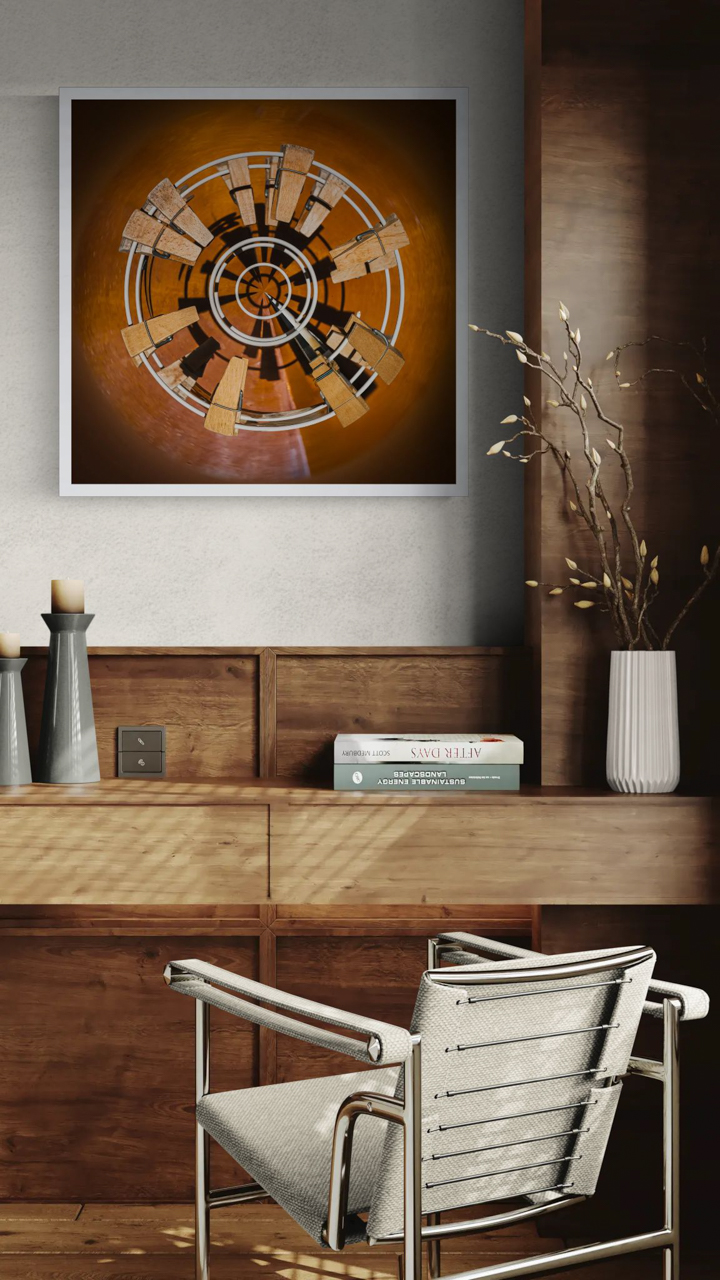
Art photography by Paul Marnef available in several finishes and formats: Planet of Clothespins
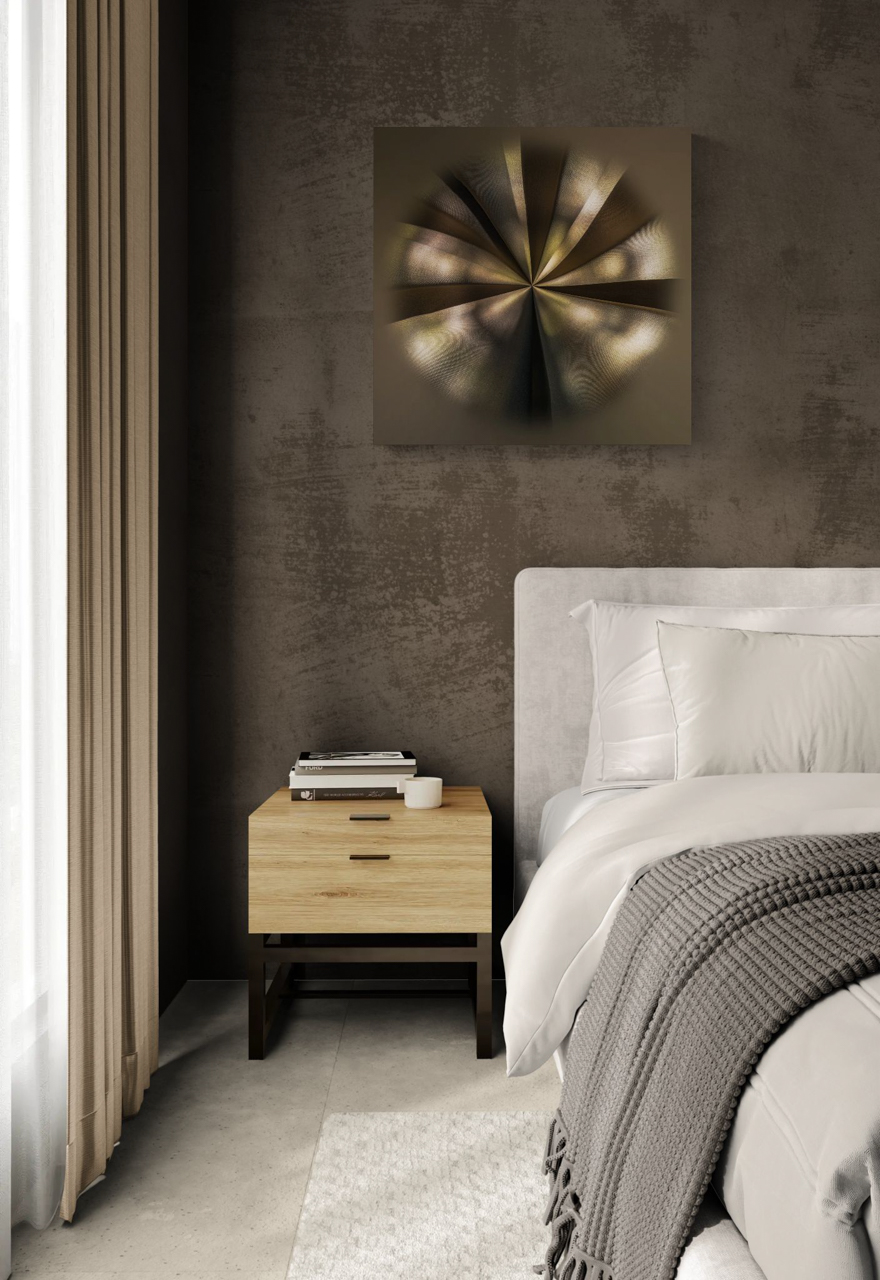
Art photography by Paul Marnef available in several finishes and formats:The Temple of Glimmers
Office: Square Art Prints for Credibility, Video Conferences, and Brand Image
In an office, artwork becomes a visual cue. For an individual, it establishes a certain atmosphere. For a company, it reinforces its identity. Therefore, the size must be legible, especially on a wall visible during video conferences. Consequently, a well-sized square is often more effective than a standard format.
Indeed, the square naturally frames the eye. Moreover, in
black and white photography or prints, a powerful square conveys an impression of control. Thus, your company image gains coherence, and the office becomes more sophisticated.
Recommended Sizes for an Office (Square/Round)
- Square: 60×60, 80×80, 100×100 depending on viewing distance.
- Round: 80 cm in diameter if you want a more artistic touch.
- Fitting Options: Dibond aluminum (understated), plexiglass (powerful presence), or fine art paper (elegant).
Next, on the production side, choose a good lab: calibration, ICC profiles, DPI control, ink management. This is how you get a high-quality photo, superior quality, and long-lasting results.
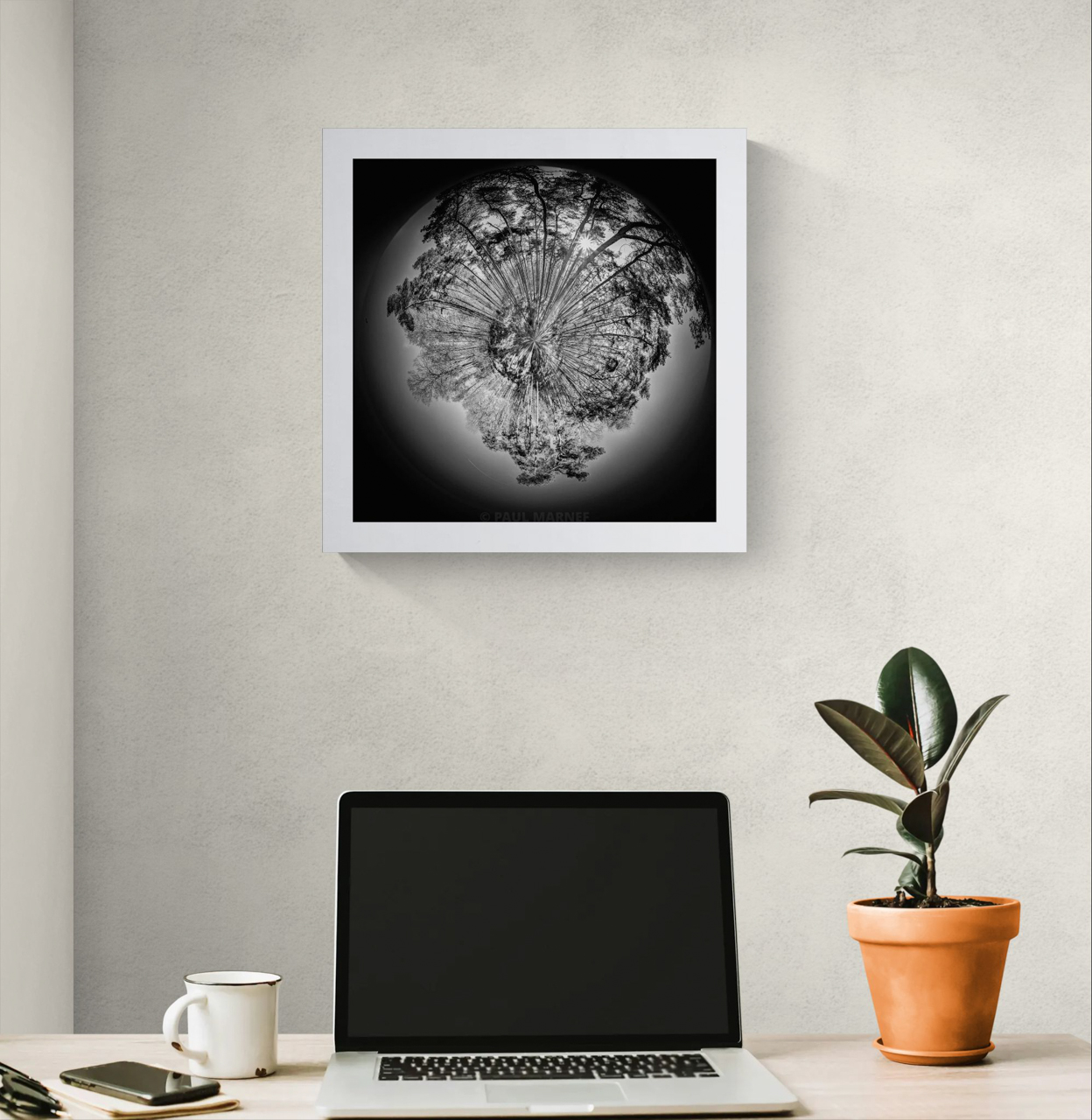
Art photography by Paul Marnef available in several finishes and formats: Monochrome Treetops Round
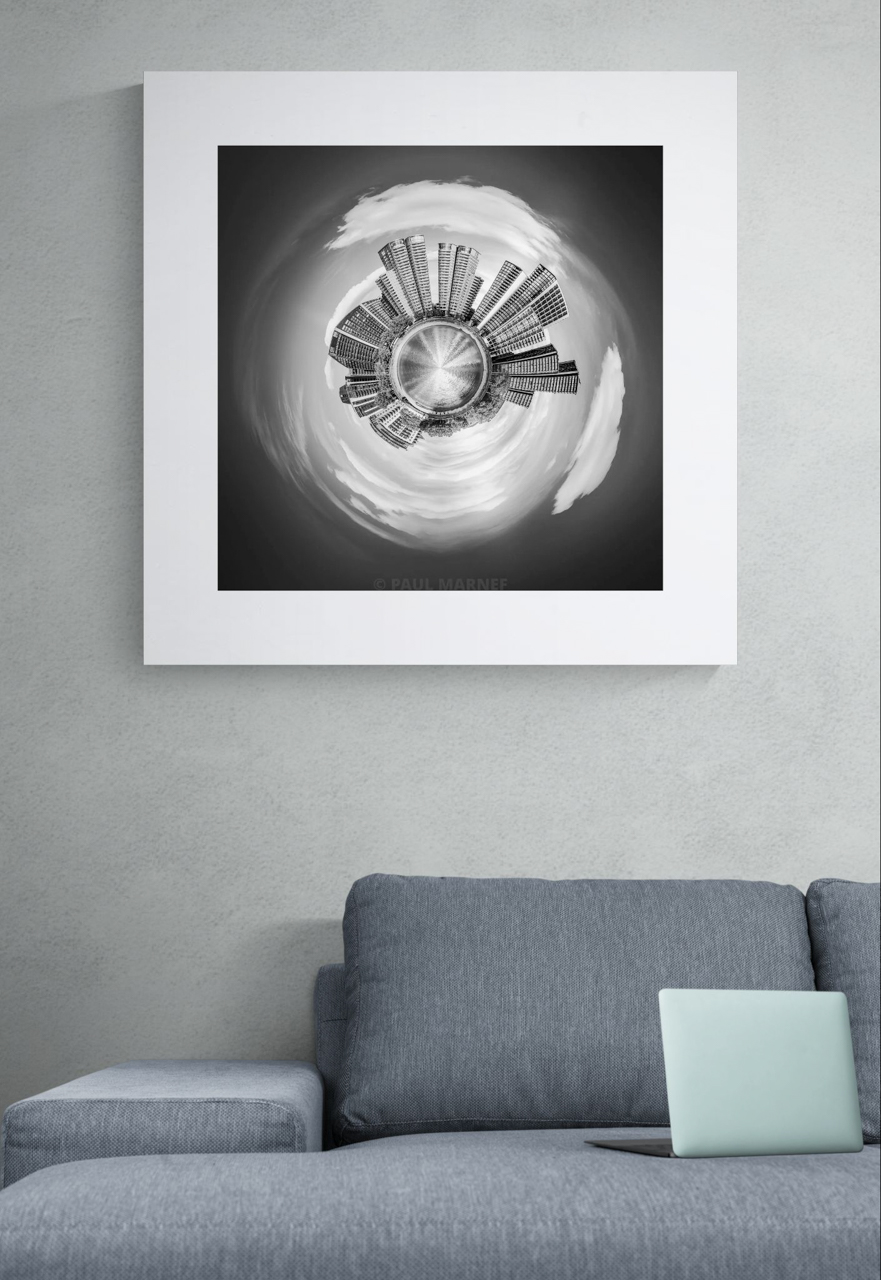
Art photography by Paul Marnef available in several finishes and formats: The Eye of the City
Black and White: A Size That Reveals the Material (and Not Just the Image)
Black and white is demanding. It emphasizes sharpness, texture, contrast, and gradations. So, if you love black and white, avoid sizes that are too small. Consequently, a black and white square print often benefits from being slightly larger than you might expect.
Furthermore, the finish plays a major role:
art paper, fine art paper, sometimes a more "
baryta" finish, or an
aesthetic inspired by film photography and silver gelatin prints (even if the image is digital). This results in a print that resembles a collector's item.
In other words, if you're looking for a simple, elegant, and lasting piece, a black and white square print on premium paper is a very strong option.
Poster or Fine Art Print: Clarifying Without Confusion
Let me be clear: a
poster, posters, or a personalized poster all have their place in
decoration. However, they don't offer the same promise as a fine art print. A poster is often just an image. A fine art print is an object: materiality, precision, longevity, intention.
Of course, in everyday language, we often read: "print photos," "print a photo," "print," "have printed," "print a poster," "post a photo," "post an image." And, for the general public, brands like CEWE, Pixum, Fuji, Kodak, or "Kodak Express" exist, as do photo processing and developing services.
However, here, we're talking about a different approach: prints, photo prints, photo prints, controlled printing, and true print quality. Therefore, the finish (fine art paper, Dibond aluminum, plexiglass) is key.
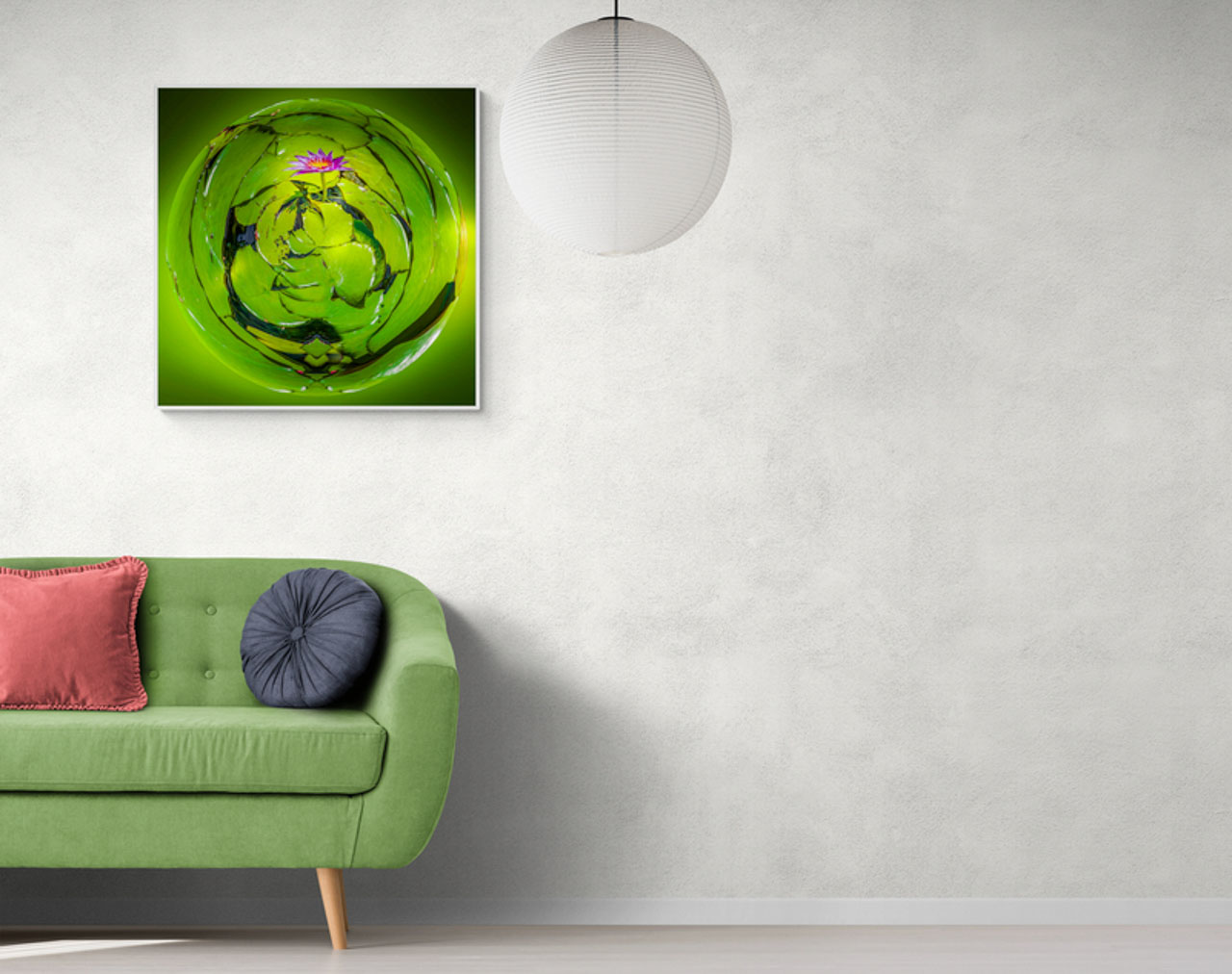
Art photography by Paul Marnef available in several finishes and formats: Water Lily of Light
Ordering the Right Format: Planning, Ordering, and Peace of Mind
First, choose the room: living room, hallway, office. Then, choose the size: square or round, small or large. Next, choose the finish: fine art paper, Dibond/aluminum Dibond, or Plexiglas. Finally, confirm the production: lab, quality control, packaging, and shipping costs.
If you're unsure, the easiest way is to send me the following information: the wall width, a photo of the location, your viewing distance, and your preference (color or black and white, square or round). This way, you can order with confidence. In other words, your order becomes a sure decision, not a gamble.
Furthermore, small framed 20x20 cm prints are perfect to start with. Then, you can add to your collection: a 40x40 cm, a 60x60 cm, and then a large 100x100 cm. It's a gradual and enjoyable way to build a collection.
Conclusion: The right size is the one that brings the planet to life.
In short, living room = large signature square or circle. Hallway = a series of squares, and small framed 20x20s to create rhythm. Office = a legible, premium, credible square. Then, the finish must be consistent: fine art paper, Dibond aluminum, plexiglass, and nothing on canvas.
And above all, choose a size that reveals the artwork. Imaginary Planets are not meant to be timid. On the contrary, they come alive when they take their place, when the texture appears, and when the depth is felt.
If your goal is to buy an art photograph that truly transforms a space, choose the square (or circle) that appeals to you… and give it a bold size.
Discover the works available in fine art finish
The Imaginary Planets series is offered in several professional finishes: Fine Art print, Chromaluxe, Diachrome, or other media depending on the artwork. Each print is produced in a limited edition, signed, numbered, and accompanied by a certificate of authenticity.


